Monday, March 16, 2015

The hangover of slavery


Juan Williams writes in a recent WSJ article that Clarence Thomas has a copy of the 13th Amendment on his office wall.  This barely passed the congress 119 to 56 or by 2 votes.   His opinions are rooted on the premise that the 14th Amendment can’t mean different things for different people.   He cheers personal responsibility.  He argues there is no proof that integration improves education.   

The legacy of the 2nd largest slave economy in world history continues to leave a racial and political divide.  Two and a half centuries of slavery and white fear of a black insurrection have left their mark.


Black discrimination did not go away after the Civil War and 13, 14 and 15th Amendments.
As Martin Luther King said in 1963 :

Five score years ago a great American, in whose symbolic shadow we stand today, signed the Emancipation Proclamation.  This momentous decree came as a great beacon light of hope to millions of Negro slaves who had been seared in the flames of withering injustice.  It came as a joyous daybreak to end the long night of captivity.


But one hundred years later the Negro still is not free.  One hundred years later, the life of the Negro is still sadly crippled by the manacles of segregation and the chains of discrimination.  One hundred years later, the Negro is still languished in toe corners of American society and finds himself in exile in his own land.  So we have come here today to dramatize a shameful condition.


In a sense we’ve come to our nations Capital to cash a check.  When the architects of our republic wrote the magnificent words of the Constitution and the Declaration of Independence, they were signing a promissory note to which every American was to fall heir. 


This note was a promise that all men, yes, black men as well as white men, would be guaranteed the unalienable rights of life, liberty and the pursuit of happiness.


It is obvious today that America has defaulted on this promissory note insofar as her citizens of color are concerned. Instead of honoring this sacred obligation, America has given the Negro people a bad check; a check which has come back marked "insufficient funds." 
 
But we refuse to believe that the bank of justice is bankrupt. We refuse to believe that there are insufficient funds in the great vaults of opportunity of this nation. So we have come to cash this check- a check that will give us upon demand the riches of freedom and the security of justice. 


To Clarence Thomas, after Selma, the country paid with passage of  the voting rights act. 


Professor David Blight points out, in his Open Yale Course, when Lincoln ran for reelection, his opponent McClellan, who opposed emancipation received 45% of the vote.  If southerners had voted, a majority of Americans would have voted against emancipation.  General Sherman never wanted to free slaves and declared they would never join his army.  Slavery had been legal in northern states up to the 1840s.

Per Blight, Reconstruction was a referendum on the war. Both sides had to inhabit the same land and participate in the same government.  The south had lost everything except its faith in white supremacy
Between 1870 and 1876 there was a southern democratic revolution. The move toward southern redemption is rooted in heir hatred of the rise of black political and economic independence.  By 1868 11 of the 21 northern states denied the rights of vote to blacks.  In 1868 the southern democrats used the KKK to revive themselves.   In 1868 Grant said he would have no policy, "against the will of the American People."  This election was the most violent racist election in American history.   The republicans were the party of the black mans right to vote.  The democrats promised to return the south to home rule.   Blair the VP candidate said,” Republicans have oppressed the South by subjecting it to the rule of a semi-barbarous race of blacks, who, are polygamist and destined to subject white women to their unbridled lust.  “Let White Men Rule America”, said a Louisville paper.  Thousands of blacks were killed in the election of 1868 in the South.  The result was that the republicans kept a veto proof congress.  Without the half million blacks who voted for Grant he would not have won the presidency.  

When the 15th amendment passed, of the 3 versions that were debated the most conservative passed.  It did not ban literacy testing or other voting requirements, as did the other versions.   A third version gave all males over age 21 the right to vote.    The amendment that passed left the door open for the states to restrict blacks from voting.   

Just being free did not give blacks the means to advance themselves.  It was noted the emancipated slaves own nothing because nothing but freedom had been given.  They owned their body and labor.  They lacked physical and human capital.  The goal of white southerners was to sustain a landless dependent and stationary labor force that would stay put.  Constraints were that Blacks had no assets.  There was no credit.  They also faced a regime of white supremacy.   Reparations were proposed.  A bill to give 40 acres and 60 dollars to each freedman did not pass.  A bill to loan money to buy land did not happen.  Blacks ended up becoming tenant farmers, which gave them control of some land.  For most it became a dead end of debt peonage.  By 1900 85 percent of freedman did not own land.
To understand our racial legacy Blight recommends the book :The Souls of Black Folks  by DuBois  


  In order to preserve the union the freedom and rights of blacks were sacrificed both in North and South.  My memory of Jim Crow was the white only sign on a restaurant seen on a drive to Florida.   That was the South.  But the lease on my parents Levittown, NJ  house had a clause that the house could never be sold to blacks.   This became illegal in ‘65.   


So have things improved over the past 50 years?   Yes , but .


  Clearly, there is unfinished work.   Whether implicit or explicit racism discrimination continues in education, employment, housing, criminal justice, and other areas.   Many of these are cultural and without continued efforts to improve the culture by shaming those who blatantly discriminate they will continue.   Without decent jobs and a level of support for those at the bottom the societal breakdown will continue.

The Lockian model of Freedom, property rights, small government can not provide for the changes needed for the challenges ahead.


 The 14th amendment has not applied to criminal justice.  eg. Ferguson.

As noted on the NAACP website:

Racial Disparities in Incarceration
·  African Americans now constitute nearly 1 million of the total 2.3 million incarcerated population
·  African Americans are incarcerated at nearly six times the rate of whites ·  Together, African American and Hispanics comprised 58% of all prisoners in 2008, even though African Americans and Hispanics make up approximately one quarter of the US population

Drug Sentencing Disparities
  • About 14 million Whites and 2.6 million African Americans report using an illicit drug
  • 5 times as many Whites are using drugs as African Americans, yet African Americans are sent to prison for drug offenses at 10 times the rate of Whites
  • African Americans represent 12% of the total population of drug users, but 38% of those arrested for drug offenses, and 59% of those in state prison for a drug offense.
  • African Americans serve virtually as much time in prison for a drug offense (58.7 months) as whites do for a violent offense (61.7 months). (Sentencing Project


 The black unemployment rate has consistently been twice as high as the white rate for 50 years


Monday, December 1, 2014


Inequality

Rich is now defined as having 30 million dollars

The bottom 60 percent has negative net worth.


At the bottom money can buy happiness

Happiness by survey  vs.  GDP per capita
from Page Model Thinking Course


Life is a series of financial shocks.

Illness
Disability
Death of a spouse
A child
College
Unemployment
Retirement
Liability

Insurance is the pooling of risks to limit random gratuitous inequality

Health insurance
Disability insurance
Life insurance
Unemployment insurance
Social security
Liability and homeowners
Workers Compensation

Bankruptcy was an improvement of the ancient Greek method of becoming a slave for 3 years to ones creditor for non-repayment.  Student debt is now not dischargeable by bankruptcy   


OYC Capitalism Course


The utility of money is an S curve.  This means at the bottom there is little utility to getting a few dollars.
Incentives at the bottom are different.
So a Starbucks treat is a rational choice to saving.

In the US  food, shelter, healthcare, and  insurance are considered options.
Government plays the major role in covering risk through tax and welfare and education
(Government is essentially an insurance company with an Army - Krugman )
Charity fills some of the gap

Robert Owen coined the term socialism to pool risk.   
He tried creating New Harmony, Ind.   Where everything was shared and it didn’t work.

Piketty Model
 if R >g inequality will increase.
Economics of Inequality 
Thomas Piketty


Deng Xiaoping  -  “we are all going to get rich but some will get rich first.”


Sunday, July 13, 2014


These are some excellent resources to learn computer coding from general to specific for ios.  I ran across that are on iTunes U and  You Tube

The first three  are basic computer courses

Harvard CS50  2013 

Programming Methodology  Standford

Object Oriented Programming Swinburne University

Developing ios 7 Apps for iPhone and iPad   Stanford

Advanced iPhone Development  2010  Madison Area Technical College 

Swift Programming Tutorial 

A helpful book is Sams Teach yourself ios 7 Application Development although now you would probably want to start with Swift which is easier.   You can download the free Swift book from Apple.


Sunday, April 13, 2014


Why we have the Affordable Care Act  (ACA)

Insurance or the pooling of risk should shield people from the financial risk of disease.  Unlike, other types of insurance, the healthcare marketplace has some unique problems including moral hazard and adverse selection.    With  asymmetric information, healthy people tend to round their low risk estimation to zero and drop out of the insured pool, which raises the average cost to insure everyone left to a level above that which low risk people will pay.   On the other hand, when insurance companies assess applicant risk and underwrite in order to price profitably, 1 in 7 applicants prior to the ACA were  rejected for individual health insurance. 
 Like electricity, phone, and cable markets the healthcare marketplace is not competitive but consist of local monopolies.   Other problems include that people can not assess their utility (probability of loss times the amount) , they aren’t aware of taxes, and that the interest of future generations is not reflected in the market.
Most people get insurance from their employer sine the insurance benefit is not taxed and employers generally have a healthier risk pool.  Most large companies self -insure their risk.   The risk is that employees who get sick loose their jobs and then their insurance. 
One original health insurance model was that insurance companies would offer pairs of insurance policies.  The healthy would buy the less expensive and less generous plan, which the sick would avoid.  That is how the market would segment.   Experience showed many comprehensive plans were not profitable due to adverse selection.  


If the average cost is higher than the demand curve the market brakes down


The ACA has been implemented and there is a lot of complaining by some.  So why do we have this.  It was the reaction to a problem.  15% of us didn’t have healthcare insurance and 13% of us were underinsured.     Healthcare costs were increasing at an unsustainable rate and expected to grow to 35% of GDP.  
            In 1963, the economist Kenneth Arrow predicted medical insurance would increase the demand for medical care.   The Rand experiment and Oregon experiment showed that providing health insurance increases annual spending by 25%.   Rand showed people spend less up to their stop loss limit.  However the amount is 25% less than the  predicted amount because people foresee that at the end of the year their marginal cost of healthcare is zero.  High deductible plans often have a self-pay to $3000 and then the insurance pays.   


The provision of healthcare insurance increases moral hazard and the price and quantity used but the lack of healthcare insurance leads to under utilization and a lower quality of life.   Leaving Medicaid to the states leaves areas of third world healthcare access with third world healthcare outcomes in poor areas of the US. This contrasts with Rwanda which is able to provide a uniform level of basic healthcare throughout the country.
            The growth in healthcare spending led to to an increase in investment and development of new technology.   The demand increase was led by these improved technologies with their low cost to patients and the moral hazard of providers who are rewarded for their use.   Provider side moral hazard is demonstrated by the 15% drop in Medicare hospital length of stay with the introduction of DRG financing which paid a fixed amount for each hospital admission.  ACA does try to reduce cost buy encouraging Accountable Care Organizations, which would provide care at a fixed cost and by taxing luxury health plans. 
            Thus we have multiple problems including the rising cost of healthcare, unequal access and distribution and lack of social services which lowers US healthcare statistics to that of Cuba, and that without an individual mandate that makes everyone pay into the system people won’t buy healthcare insurance until they are ill.   The ACA is one improvement step but not the final answer.   
           

Saturday, January 4, 2014


I recommend  Andrew W. Lo’s Mit Finance course on I tunes U. Lecture 19
Behavioral Finance :   Watch the one on efficient markets 2


Are markets efficient?  Buffett says clearly no. They are subject to animal spirits.    Market efficiency requires rationality which comes and goes in waves.  Behavioral finance says people suffer from loss aversion, overconfidence, overreaction, herding, and mental accounting.


Daniel Ellsberg,  most famous for releasing the Pentagon Papers in 1969 came up with the Ellsberg paradox  People will pay less for a gamble with less clear odds.   When there is uncertainty about risk people shy away. We are hard wired to avoid things we don’t understand because these could kill you, to avoid hidden crocodiles.  That is why when markets get scary people shy away although the expected return is increased.


Frank Knight looked at why entrepreneurs are paid so much.  He decided that it is because they take on uncertainty and not just risk.   Uncertainty is the risk that no one can quantify e.g. Nanotechnology. 


Since people are unable to assess odds, they are susceptible to be Dutch Booked.

It is though that his provides a limit to irrationality.  Smart people will take advantage and the market will correct.   An example is arbitrage. 
Efficient market folks feel that market forces will force people to be rational if there are enough rational people around.
However Keynes said the market can stay irrational longer then you can stay solvent. 


Antonio Damasio, a neurosurgeon, wrote a book DescartesError in which he argued that rationality stems from emotion.   He describes a patient who had a brain tumor removed.  Although he tested normally in math or logic he was unable to function in the world and quickly lost his job.  After the surgery he had no emotion reactions as shown by eye blink tests.   You have to be able to feel to act rational.


This relates to the triune brain.    The reptile brain regulates heart rate and vital functions. The mammalian brain sits over this and it regulates fear, greed, love, and emotion.   The hominid brain or neocortex is responsible for language, math and logical deliberation.    Under the stress  of shock such as loss of blood the reptile brain shuts last.   People faint but keep breathing.   In fact you can be brain dead and continue breathing.  Of the remaining brains the hominid brain shuts down first when under stress.   Evolution favors running from thetiger.   Experiments have shown under stress or pain the neocortex does not resume normal function for hours after an insult.  Under stress, body shunts blood away from the cortex.   When stressed people cannot use the cortex and don’t think. 
That is why love makes you stupid.

Emotion is necessary for rationality but too much emotion impairs rationality.

Best advice:  Be clear about your goals.  Decide what you want to achieve and ask will my current actions help or hinder the objectives. 

Lo developed the Adaptive Market Hypothesis

He says that prices in the market reflect available information and the number of species in the economy.  Species means professionals, pension managers, hedge fund managers, and individual investors.    When people are stressed either positive or negative, they are not rational. 

This theory takes a biological view of markets.  We are both creatures of our rational brains and emotional brains.

Adaptive market theory properties are that:
Individuals act in their self-interest
They make mistakes
They learn and adapt
Competition drives adaptation and innovation
Natural selection shapes the market ecology
Evolution determines market dynamics

It takes negative feedback to cause us to learn and develop adaptive heuristics or thought process shortcuts . 

The implications of the Adaptive Market Hypothesis are that:
Risk reward is not stable because individual preferences are not stable
Risk premiums are time varying. 2007 is different from 2008
Limited arbitrage (free lunches) exist from time to time 
Strategies wax and wane
Adaptation and innovation are key to survival
Survival is all that matters


Market efficiency goes in cycles that depend on the population of investors that are interacting with each other.   These cycles can be anticipated and perhaps  some profit can be made.


Sunday, September 29, 2013


Vegas -


I played some Slots.  Actually I put a dollar in the machine, bet a penny, and won $4.25.  At this point I quit and collected by $5.25 thinking my return could never be higher.  

The Gamblers Ruin problem goes back to the 1600s.   If 2 gamblers bet back and forth a dollar you can calculate the probability that one will go bankrupt.   I listened to Joe Blitzstein's lecture on this on his Harvard stats course at Itunes U

The important parameters are that gambler A has i amount of money and gambler B has N-i

The probability of A winning a round is p and of B winning is q which = 1 - p

If p = q, fair odds,   then the odds of A winning = i/N or what fraction of the wealth A has.

The Probability of A winning = 1-(q/p)^i/1-(q/p)^N with unfair odds. 

if p = .49 and i=N-i that is A and B have equal amounts of money.
then if N = 20   the chance of A winning is .4
           N =  100 the chance of  A winning is .12
           N = 200  the chance of  A winning is .02

In Las Vegas the casino has more money and games are more unfair

Since the probability of A winning + the probability of B winning is 1 there is no chance the game goes on forever.


In slots it is hard to figure out the odds of winning a hand as you can read below.

From Wikipedia
The return to player is not the only statistic that is of interest. The probabilities of every payout on the pay table is also critical. For example, consider a hypothetical slot machine with a dozen different values on the pay table. However, the probabilities of getting all the payouts are zero except the largest one. If the payout is 4,000 times the input amount, and it happens every 4,000 times on average, the return to player is exactly 100%, but the game would be dull to play. Also, most people would not win anything, and having entries on the paytable that have a return of zero would be deceptive. As these individual probabilities are closely guarded secrets, it is possible that the advertised machines with high return to player simply increase the probabilities of these jackpots. The casino could legally place machines of a similar style payout and advertise that some machines have 100% return to player. The added advantage is that these large jackpots increase the excitement of the other players.
The table of probabilities for a specific machine is called the Paytable and Reel Strips sheet, or PARS. The Wizard of Odds revealed the PARS for one commercial slot machine, an original International Gaming Technology Red White and Blue machine. This game, in its original form, is obsolete, so these specific probabilities do not apply. He only published the odds after a fan of his sent him some information provided on a slot machine that was posted on a machine in the Netherlands. The psychology of the machine design is quickly revealed. There are 13 possible payouts ranging from 1:1 to 2,400:1. The 1:1 payout comes every 8 plays. The 5:1 payout comes every 33 plays, whereas the 2:1 payout comes every 600 plays. Most players assume the likelihood increases proportionate to the payout. The one midsize payout that is designed to give the player a thrill is the 80:1 payout. It is programmed to occur an average of once every 219 plays. The 80:1 payout is high enough to create excitement, but not high enough that it makes it likely that the player will take his winnings and abandon the game. More than likely the player began the game with at least 80 times his bet (for instance there are 80 quarters in $20). In contrast the 150:1 payout occurs only on average of once every 6,241 plays. The highest payout of 2,400:1 occurs only on average of once every 643=262,144 plays since the machine has 64 virtual stops. The player who continues to feed the machine is likely to have several midsize payouts, but unlikely to have a large payout. He quits after he is bored or has exhausted his bankroll.[21]

Saturday, August 24, 2013


The Federal Reserve calculates the value of Assets in the USA  (Table B – 100 )

Assets

Real-estate                 18   trillion
Pensions                     13   trillion
Family businesses      6.2 trillion
Deposits in banks      7.9 trillion
Corporate Equity       8.5 trillion
Mutual Funds                        4.7 trillion
Durables                    4.6 trillion
Treasury bonds         1   trillion
Corporate bonds       1.9 trillion
Life insurance            1.3 trillion
Other                          2 trillion

Total                           70 trillion

Liabilities

Mortgages                  10 trillion
Credit                                      2.5 trillion
Loans                          1.4 trillion

Total                           13 trillion

Net worth                  56 trillion

Federal debt              14 trillion
State debt                  3 trillion


Human Capital  = national income(gdp) / (int- growth rate) 
                               = 13 trillion / (.05/.03)
                               = 260 trillion

Conclusion -  Suzy Orman is right.  People should come first, money second. Increasing the value of human capital through education, a social safety net, healthcare, a higher minimum wage will increase wealth more than investing in things.

Sunday, August 4, 2013


Stats in Risk   

Probabilities were invented in 1600s.  Kahneman showed that people round off their probabilities to: won’t happen, will happen, or maybe.  We are not good a judging how much insurance we need.  Robert Shiller points out that with stats we are like the cultures that count one, two, and, many.  They are able to remember hundreds of different plants but they do not count. 

In emergent theory outcomes are dependent on millions of little things, independent events, that accumulate.   Think of humans from DNA.

Unexpected events are often caused by a failure of the independence of these events.   For example changes in the stock market indices should be random since market changes are based on news, which is random and the indices cancel out individual stock risk.  Are stock returns independent variables?  They are until group think sets in. 

Fat tail events complicate this model.   In Finance, low probability shocks that shouldn’t happen occur.This is why geometric returns are more useful.  Outliers exist .  Random shocks to the economy are normally distributed. In nature the normal distribution is not the only distribution that occurs and some
other distributions have fatter tails.   -  Kurtosis


The Central limit theorem is probably the most important theory of statistics.  if you have independent identically distributed random variables and they have a finite variance  then the distribution of an average of these variables converges to a normal distribution as the number is increased.  The normal curve is so common because so many things we observe are averages of separate events.   Note that he normal distribution does not have fat tails.   This is why things work most of the time.

One reason that the normal distribution is so common because most events we observe are an average of independent events.   In a normal distribution the tails drop off.   It assumes the underlying variables have a finite variance. 

Other stat concepts include
Variance – is the sum of weighted probabilities of deviation from the mean
And standard deviation = square root of the variance

Covariance - how two different random variables move together?
 Can be positive, negative, or zero if unrelated


Correlation -  is scaled  -1  to +1
P = cov(x,y) /(s1,s2)

 
Low covariance is important in reducing risk.  We may not get expected return if the observations are not independent.


In the Law of large numbers, which is another stat concept– although there are a lot of independent shocks if they are independent, there is not much risk.   Variance goes to zero as n goes to infinity.   Insurance relies on this.


Value at Risk  VaR  was invented in 1987 to measure corporate risk.  Companies would calculate that there is a 5% probability   of loosing a million dollars.  It was found not to work well in 2008.

CoVar  was invented by  Brunnermier at Princeton.  It is  Value at risk of financial institutions conditional on other institutions being under distress.  This is supposed to be a newer more accurate model


Majority rule can be a good way to decide the better of two options.  Intrinsic justifications do not concern themselves with the quality of the decisions.  Voting outcomes can track truth if three conditions hold.  The voters are better choosers than random, are independent, and they vote sincerely.    One problem is that people  have preexisting cultural mindsets which determine how they look at information or even what new information they consider.   Only ten percent of people can explain what nano-technology is but 80% have an opinion on how safe it is.  Page argues that good decisions depend on sufficient cognitive diversity of the group or having people use different models to arrive at a solution.   A  smart diverse group of people is needed to get to the right answer.      

I am not sure how this ties to religion or even political parties, which encourage uniformity of thought.   Most people do not choose their political party or religion.  


 Shiller Finance Lecture

 wisdom of crowds

Scott Page wisdom of crowds

Saturday, July 6, 2013

Thursday, July 4, 2013

Travels


More travels.  Went to Krakow and Prague.  In the 19th century most of the worlds Jews lived in this part of the world.  Now it is a museum.  My grandparents and father came to America from a small village near Gorlice, Poland.  There is a plaque in the town square in memory of the Jews who used to live there.   The town still looks similar to they way it was in the 1800s.   The land where his father had a farm is still farm country but there are no remnants of any Jewish community.   Countries change.  
  Wooden bridge near Owczary near Gorlice
Gorlice

Trip to a town near Owczary

Sunday, April 21, 2013


Return trip to Rwanda Having been there in 2010 on a Group Health Medical CME tour. It was interesting to return and see the changes. Rwanda is a beautiful country with a temperate climate and friendly people. A former Group Health doctor , who adopted a Twa village and has been returning regularly, organized the trips. Since the last visit the village has been moved off the side of a hill where they lived in mud huts with leaky thatched roofs to more typical brick Rwandan housing and given land to farm and raise cattle. The kids are able to attend school and look much healthier. At the last visit they were malnourished and we were supplying peanut butter supplements. Now they look fed. The villagers create crafts and continue to perform their traditional dances.


Kigali was clean, safe, and easy to get around. There are very nice restaurants and we ate well. We spent one afternoon at the genocide museum. Considering this only happened in ’94 perhaps, not by choice, they have moved on. There seems to be the same process of dehumanizing a group and then organizing the killing for all genocides. Rwanda commemorates its genocide for 1 week each year in order to facilitate healing.


 Pretty much everywhere we visited was farmed. A person we met from the African development bank told us that agriculture has been one of their successes.


 This trip we went to see the gorillas and they were quite entertaining.


 Protected from poachers, they see to lead a nice life eating plants and insects and climbing thru the forest. We met several nice people who are an example of the many that are involved in their preservation. We also visited Akagera National park. Highlights included a leopard in a tree, hippos, giraffes, and antelope. We stayed at the Ruzizi Lodge. The neat thing about sleeping in tents is you hear all the animals through the night. John Walton from Wal-Mart had helicoptered in and stayed 4 days prior. From there, we took a boat trip and saw hundred of birds that habitat the shores of Lake Ihema. I kept my limbs in the boat as they told us that a crocodile had recently killed a fisherman.

 Banking is still primitive, as we had to bring new $100 to cash into Rwandan Franks. Only Visa cards are accepted at a few places. Internet was more available then last time and faster. Service is still a bit random. I had no hot water for 3 days in my hotel, but had the internet. Others had hot water but no internet. Since they are trying to improve their tourist economy improving service is a government priority. We got to meet the Rwandan bicycle team which was started by Jonathan Boyer. It is good for the country to have representation in the Olympics.


 Healthcare is provided to most through government clinics, which feed to hospitals. Everyone is insured. They are still at the level of treating infectious diseases mostly, TB Malaria and HIV. Chronic diseases such as diabetes or heart disease are just starting to appear. One of our group was just working on introducing hospice services. Infant mortality is high. The Rwandan government spends 9% of its budget on healthcare. Many NGOs also contribute. Rwanda is clean both physically and non-corrupt country that is making progress in improving life for its people. Hopefully they can continue through good government and education.


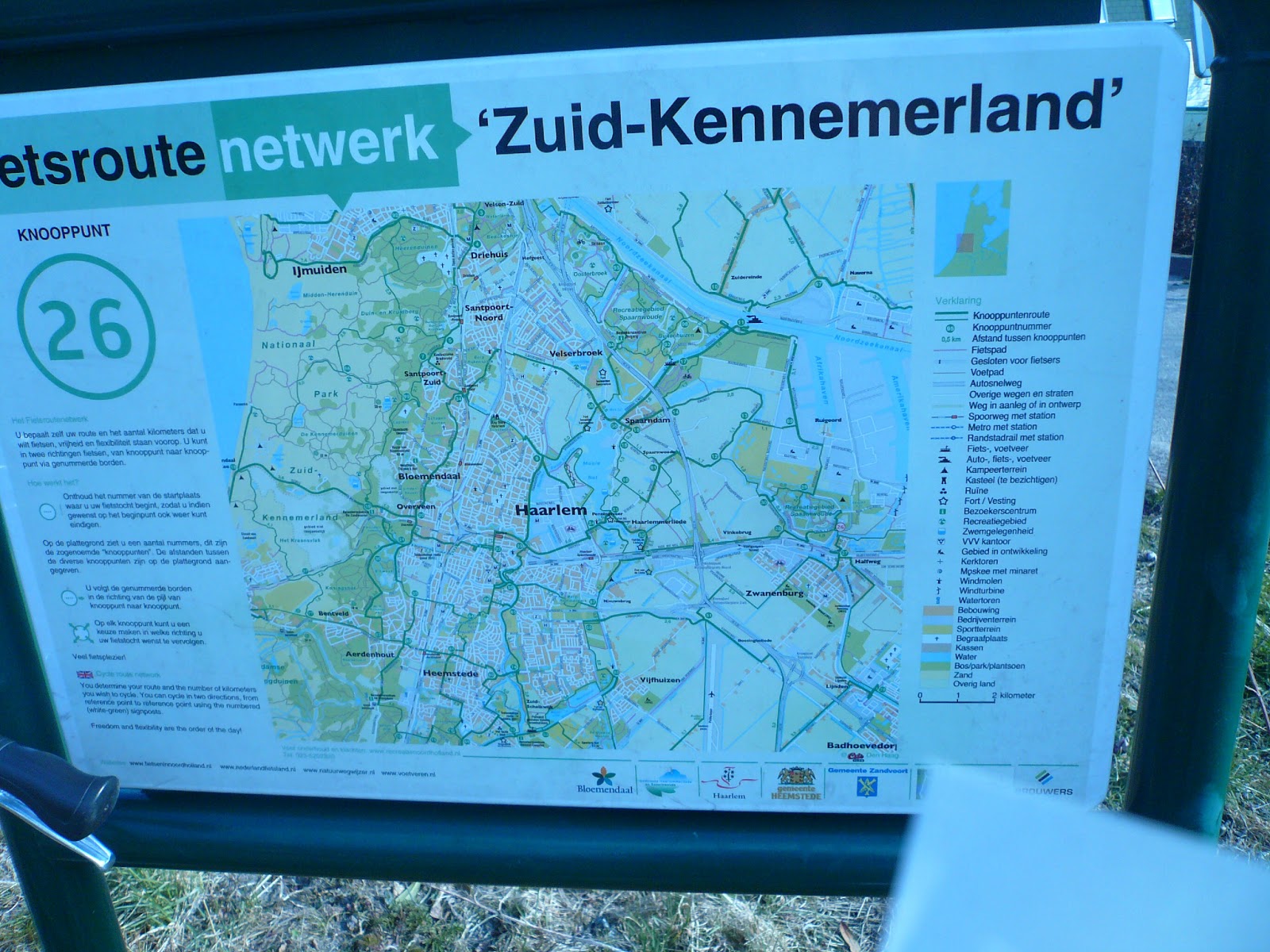
 Also got to spend a few days in Amsterdam. It was the opposite of Rwanda; freezing, brown, flat as a pancake with canals everywhere, almost everyone gets around by bike, well thought out planned architecture, old, technologically advanced, coffee and beer oriented, wealthy, egalitarian, democratic, educated, etc. I stayed in Slotermeer, which seems to have become Turkish and has a large outdoor market and lots of restaurants. The Baklava was good. The 7 and 14 tram were easy to take to the city center where I saw Ann Frank house, Hermitage –Amsterdam - where they seemed to have the Van Gogh museum, Jewish Museum and the historic In de Olofspoort. Also attended a meet-up and worked on a 3d bioprinter . The country is linked by bike trails and I was also able to bike to the coast one afternoon.